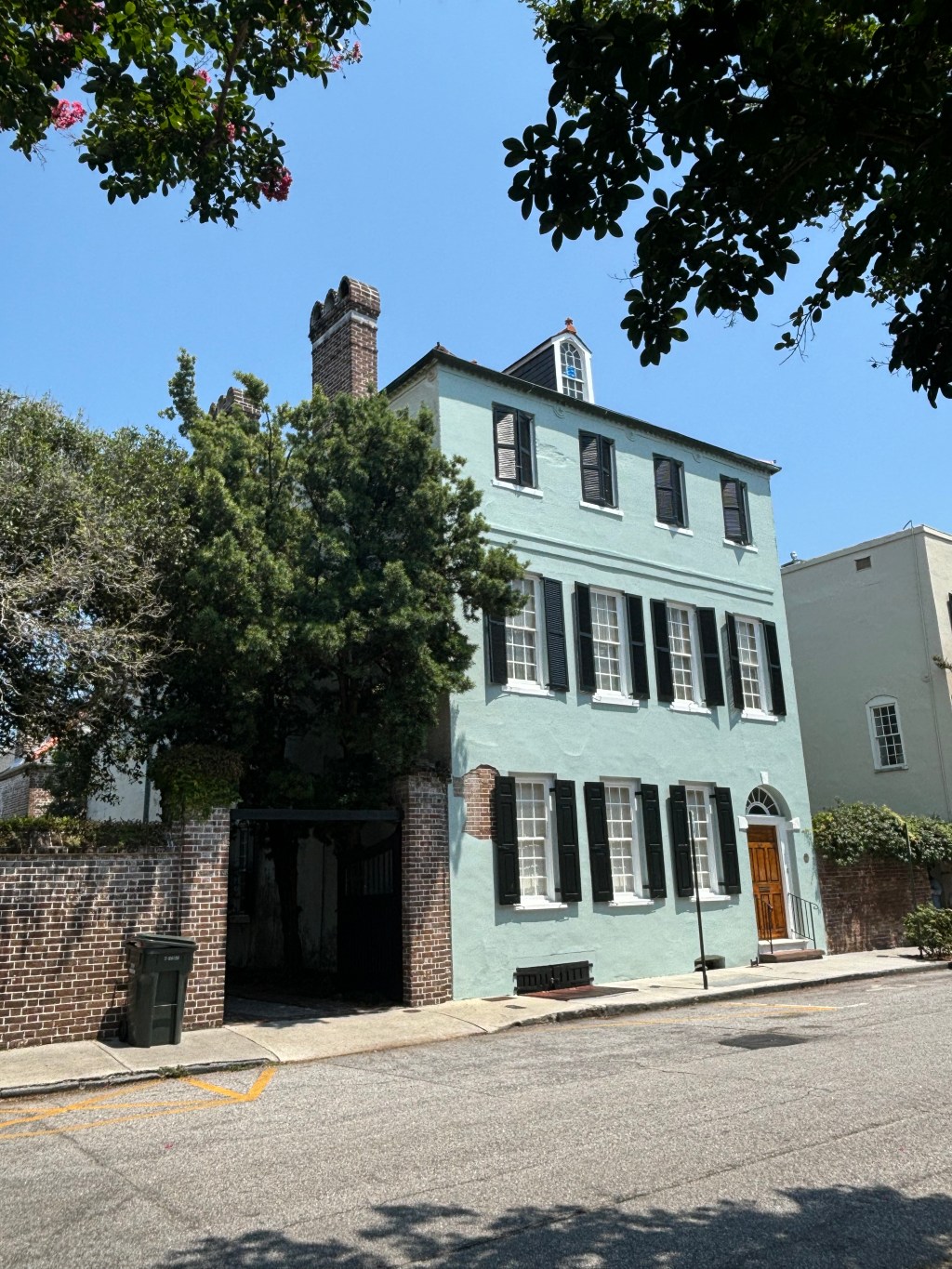
Charleston, South Carolina is home to many historical houses and sites. These 5 homes located downtown housed prominent Charlestonians and are open to the public for tours. You can visit all 5 of these houses in about four to five hours and most are within walking distance, a great way to see the city! Personally, my two favorites were the Nathaniel Russell House and the Aiken-Rhett House, but because all of them can easily be seen the same day, I’d strongly encourage you to visit them all!
Nested in the heart of downtown Charleston, this three story mansion sits atop even more layers of history. Built in the Wraggborough neighborhood of Charleston, the Aiken-Rhett house is a large yellow historical residence whose story is waiting to be unpeeled. Spanning from the Revolutionary War to the Civil War, the events which occurred on this land are shared with visitors through a thorough a self-guided audio tour. The former governor of South Carolina, William Aiken, was among the residents of this house, including the rest of his family and enslaved people. Listen to their lives and walk through their stories on your visit to the Aiken-Rhett House.
One distinction makes a visit to Aiken-Rhett very unique. Unlike the other historical homes in this collection, Aiken-Rhett has not been restored, but is instead undergoing conservation. This means the house has been preserved to accurately reflect its roots and is visible in its saved antebellum condition. There are minimal furniture and decorations to be found inside, with no frills. Peeling wallpaper and dingy mirrors line the walls, but offer guests a vulnerable glimpse into the truth of this property. Unlike other historical home museums which rope off antique furnished rooms to protect artifacts, visitors to Aiken-Rhett can walk freely through each of the rooms, providing a deeper connection to life on this estate.
I would definitely recommend a visit to the Aiken-Rhett House to be the first stop on your journey. Due to conservation, there is no air conditioning inside so an earlier visit is suggested to make the most of your experience. Starting at the Aiken-Rhett house also offers a unique perspective to carry with you throughout the next houses. As you admire the grand furniture and ornate decorations of the following estates, think back to Aiken-Rhett and the truthful history which lies underneath the frivolity.
A quick walk from your first stop, the Joseph Manigault house stands as a brick building on Charleston’s Meeting Street. Joseph Manigault was descended from poor French Huguenots escaping religious persecution and found prosperity in America as rice planters. Both his first and second wives were from very prominent South Carolina families, so he built this house and European style garden as a place for his growing family.
This small house contained many big names in Charleston history. Joseph Manigault’s first wife was a Middleton, from Middleton Plantation, whose father was a signer of the Declaration of Independence, and his second wife was a Drayton, for whom Drayton Hall is named after. This property was passed down in an effort to protect the history of the house. It was a tenement home during the Great Depression, housed USO members during World War II, and was almost demolished to become a gas station. Stand in rooms which have seen every part of America’s history as a tour guide shares the story of the house and its inhabitants.
Down by the Charleston Battery, the Edmondston-Alston House offers views of the tranquil Charleston Harbor. The epitome of historical connections, visitors can view Fort Sumter, where the first shots of the Civil War were fired, from the interior of the home where one of the few remaining original copies of South Carolina’s secession from the Union is kept. Another interesting resident of the Edmondston-Alston House is a distant relative of the original owners, an 80 year old man who still lives on the property. The intricatly designed traveling desks, a custom-made gun (which has only been shot once and is worth about a quarter of a million dollars) and the work of the first female award-winning silversmith all call this residence home.
Visit on Wednesdays as the Edmondston-Alston House offers wine on the piazza. Sip while overlooking the ships passing through the harbor and immerse yourself in the elegance of a 19th century Charleston lifestyle. Tours are timed with a trained docent waiting to answer all of your questions.
With its iconic, spiraling staircase, the Nathaniel Russell house stands as one of the most grand homes in this collection. Listen as the audio guide leads you through each of the (air-conditioned) rooms in this stunning Federalist style estate. Each room has been restored to mirror the personality of the home in its prime. Thanks to conservation technology, the walls are painted the exact same color in which they were originally found. And in the old kitchen house, you can witness active archaeological efforts to unearth the secrets of the property.
No detail was missed in the embellishment of this mansion. Nathaniel Russell’s initials are forged into the iron balcony lacing the exterior of the house and the wooden chairs upon which visitors sit in to begin their journey, were purposefully modeled after the very chair Russell used to conduct business at his desk.
If you only have time for one stop along this journey, make it the Nathaniel Russel house. Here you can explore the authentic elegant furnishings of a wealthy Charleston mansion and also experience the unearthing of deep history through the museum’s current preservation efforts.
Located a few steps from Chalreston’s iconic Broad Street, the residents of the Heyward-Washington house left a big footprint on American history. Thomas Heyward Jr. was one of the signers of the Declaration of Independence and his house hosted President George Washington on a presidential trip to Charleston. He later rented the house to the Grimké Sisters, prominent Charstonians who advocated for the rights of women and enslaved people.
The Heyward-Washington house was the first Historical Home restored and opened to the public as a museum. Audio tours walk you around the property, through the house and out into the garden. In the garden, you can enter into the kitchen and laundry buildings which are outfitted to appear as if you’ve just stepped back in time into the middle of an 18th century work day. The inside of the house contains the nation’s largest original collection of intact china dishes.


Leave a comment